
Brookfield, WI · Garage Door Service
Detached and Attached Garages Need Different Doors in Brookfield
How Brookfield's 1938-2000 housing stock and cold-severe winters change what a detached garage door needs versus an attached one, with real distances to nearby towns.
- Repairs & new doors
- Springs & openers
- Serving 6 nearby communities
Doing Nothing For Now
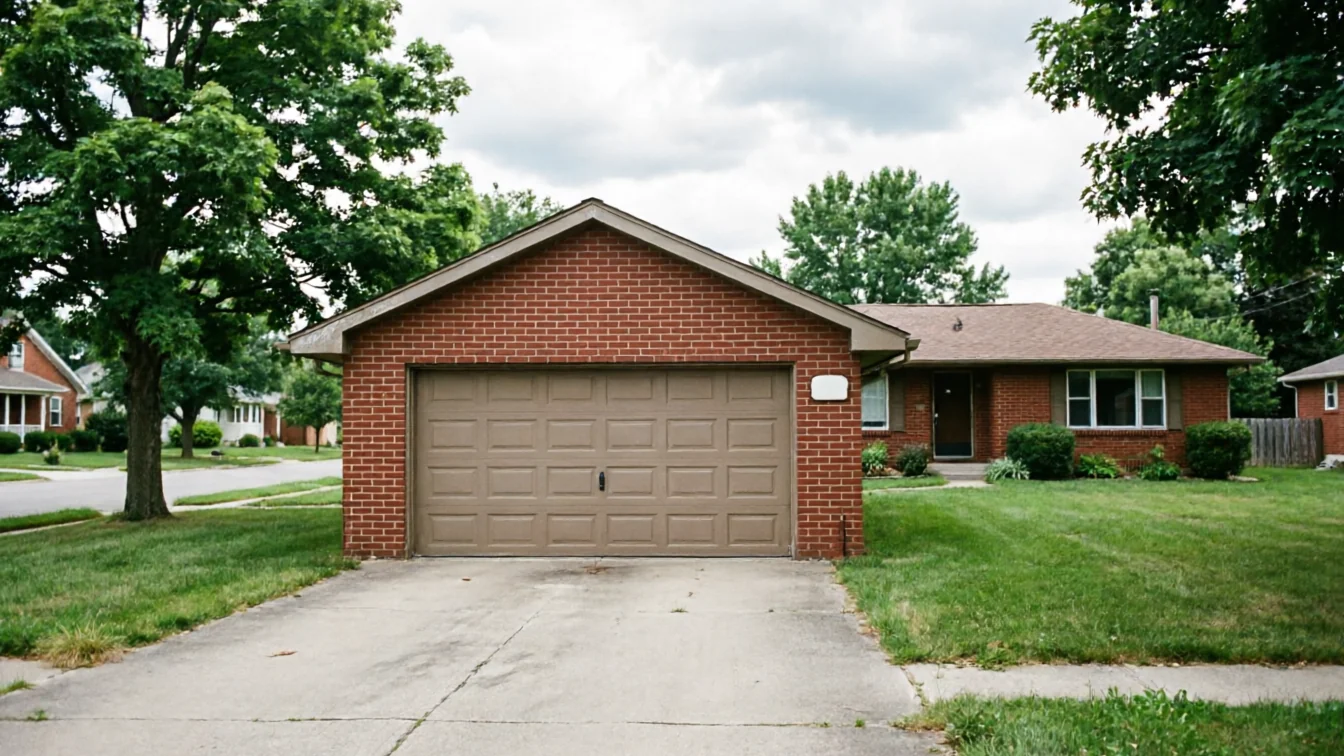
If your detached garage door still rolls up and down without a fight, you don't need to touch it just because it's old. Brookfield's housing stock runs from 1938 to 2000, with the median build year landing in 1978, and a lot of those older detached structures are still running the hardware they were built with. If the spring isn't sagging, the track isn't bent, and the opener (if there is one) still reverses on contact, leave it alone. Replacing a working door on a detached garage because a newer one exists is money spent on nothing. Where this changes is the attached garage. Because that door shares a wall with the living space, a worn seal or a door that doesn't close tight isn't just a garage problem - it's a heating bill problem and, in a cold-severe climate, a pipe-freezing problem if the garage backs onto a utility wall. Detached garages can wait longer. Attached ones, less so.
What Most People Get Wrong
The mistake we see most is treating a detached garage door like it needs the same spec as an attached one. It doesn't. An attached garage door in Brookfield is doing double duty as part of the house envelope - it needs the insulation rating and the weatherseal that keep cold air from the garage bleeding into the kitchen or the room above it. A detached garage, standing on its own with no shared wall, doesn't carry that load. Spending on a high R-value door for a stand-alone structure that just holds a car and a mower is often money that doesn't pay back. The other side of this: a lot of the detached garages on Brookfield's older lots, especially the 1960s and 70s stock that makes up most of the area, were framed for a single steel panel door, not the wider insulated sectional doors sold today. Swapping one in without checking header width and track clearance is how a job turns into a framing job. Match the door to what the structure is actually for, not to whatever's on the showroom floor.
What the Weather Here Does to It
Brookfield sits in a cold-severe climate band, and that hits detached and attached garages differently. A detached garage has no heated wall to borrow warmth from, so the steel in an older uninsulated door contracts hard in a deep cold spell - that's when a marginal spring or a stiff roller finally gives out. You'll see this more on detached structures than attached ones, because the attached garage usually picks up some ambient heat from the house. Drive a few miles out - Elm Grove is two miles off, Butler four, Pewaukee six - and you'll find the same pattern on those older lots: pre-1980 detached garages with doors that work fine in October and bind up in January. On an attached garage, the bigger cold-weather issue is usually the bottom seal letting drafts into the house side, not the door mechanism itself. Two different failure points, two different fixes, and treating them the same wastes a service call either way.
The Problem
Here's the part that doesn't get said enough: a lot of detached garages built in the 1960s and 70s weren't built square to begin with, and forty-plus years of frost heave hasn't helped. When a door on one of these structures starts binding, the honest answer is sometimes that the track is fine and the opening has shifted - no door adjustment fixes a frame that's moved. On an attached garage that's part of a 1978-median-era house, the more common issue is the door and the house settling at different rates, which throws the header out of level relative to the track. We'll tell you straight when a repair is chasing a structural problem rather than fixing a door problem, because a new spring or a realigned track won't hold on an opening that's still moving. That's not a sales pitch for a bigger job - sometimes it means living with an adjustment every year or two instead of paying for one that won't last.
Frequently asked questions
Does a detached garage need the same insulated door as an attached one?
Not usually. An attached garage door is part of the house envelope and benefits from a higher R-value and tight weatherseal because heat loss there hits your utility bill directly. A detached garage, standing apart from the house, doesn't carry that same load, so a lower-insulation door is often the more sensible spend.
Why does my detached garage door stick in winter but my attached one doesn't?
Brookfield's climate band is cold-severe, and a detached structure has no shared wall to borrow warmth from, so the steel and hardware contract more in a hard freeze. The attached garage usually picks up some ambient heat from the house, which keeps the mechanism a bit more forgiving in cold spells.
My detached garage is older - is the door opening even the right size for a new door?
Worth checking before you buy. A lot of the detached garages in the 1960s and 70s stock common around Brookfield were framed for a single older-style panel door, and the header and track clearance don't always match today's standard sectional doors without some framing work.
Related garage door services in Brookfield
More garage door guides
Book garage door service in Brookfield
Call now or request a quote - tell us what the door is doing and where you are.