
Brookfield, WI · Garage Door Service
When Your Garage Door Fails in Brookfield's Winter
Garage Door Service in Brookfield, WI for homes built 1938-2000. We fix torsion springs, openers, and tracks strained by cold winters and original hardware.
- Repairs & new doors
- Springs & openers
- Serving 6 nearby communities
How Long It Takes
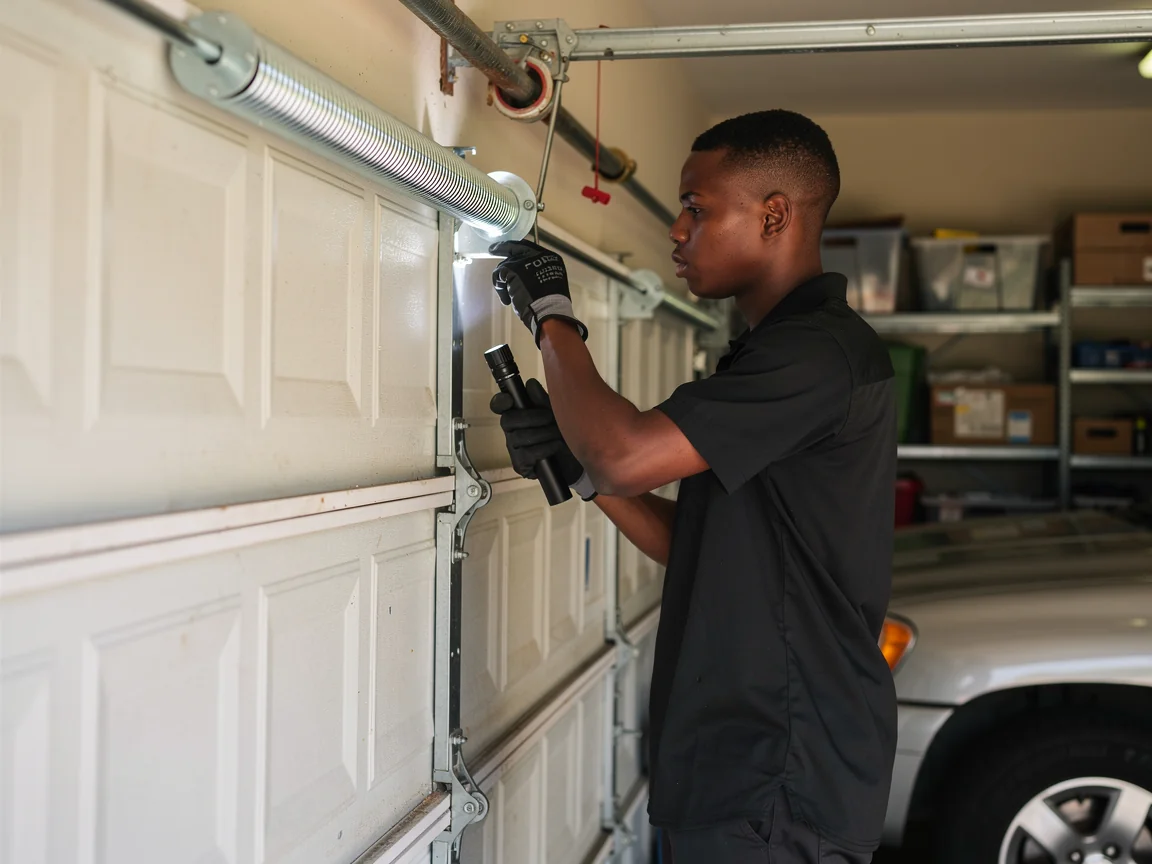
A spring swap on a standard double door usually fits into one visit if we've got the right size torsion spring on the truck. The complication in a lot of Brookfield homes is the hardware itself - houses here were built anywhere from 1938 to 2000, with the median landing around 1978, and that spread means we're dealing with everything from older side-mounted torsion setups to newer extension spring systems. If your house falls into that 1960s-70s band that's common across the area, the shaft size or drum style sometimes isn't something we carry as a standard stock item, and that can mean a short delay while we source the right part instead of forcing a mismatched one onto your door. We'd rather tell you that up front than rush a fix that fails again in six months. Openers are usually faster - most failures there are a logic board, a worn gear, or a sensor knocked out of alignment, and those don't typically require a special order. We won't guess at a number before we've looked at the door in person, because the honest answer depends on what's actually on your wall, not on a generic estimate.
Doing It Yourself
Some of this is fair game for a homeowner. Lubricating rollers and hinges, tightening loose bolts on the track brackets, replacing worn weatherstripping along the bottom panel - none of that requires us. What isn't fair game is the torsion spring itself. It's wound under enough tension to break a hand or worse if the winding bars slip, and that risk doesn't change because you've watched a video on it. If your door has two springs on a shared shaft, and one breaks, don't run the opener trying to force the door up - you'll load the second spring and the opener motor with weight they weren't built to carry alone, and that usually turns a one-part repair into a two-part one. Given the income levels common across this service area, we find most owners would rather pay for the correct repair once than patch it and call again in a month. If you're not sure whether something is a DIY job, a phone call before you start is cheaper than a second repair after.
What You Are Seeing
A door that reverses halfway up, a loud bang followed by the door refusing to move at all, or a garage that suddenly feels twice as heavy to lift by hand - these point to a broken torsion spring, and it's one of the most common calls we get. In homes built in that 1960s-70s stretch that makes up a lot of the housing stock here, the original springs are well past the cycle count they were rated for, even if nobody's touched them. Cracked panels along the bottom section, especially on steel doors from the same era, often show up as a straight-line crack rather than a dent, which is a sign of metal fatigue rather than impact damage. A grinding or shuddering opener usually means dried-out grease on the rail or a stripped gear inside the unit, and both get worse - not better - if you keep running the opener through it.
Why This Fails Locally
The service area sits in a severe cold climate band, and that matters more for garage doors than people expect. Steel contracts in cold temperatures, and a torsion spring that's already near the end of its rated cycle count is far more likely to snap on a sub-zero morning than on a mild one - the metal is simply less forgiving when it's cold. Combine that with housing built mostly between 1938 and 2000, median around 1978, and you've got a lot of doors running original or near-original torsion hardware that was never built with today's lift mechanisms or insulation standards in mind. Lubricant that works fine in summer thickens up in winter and adds drag the opener has to fight through, which accelerates wear on gears that were already sized for a lighter-duty door. None of this is a flaw specific to any one house - it's the predictable result of older stock meeting a genuinely cold climate, which is exactly why these calls cluster hardest here once temperatures drop.
Frequently asked questions
Why did my spring snap on such a cold day?
Cold makes steel more brittle and less flexible, so a torsion spring that's already near the end of its lifespan is far more likely to fail during a cold snap than during a mild stretch. If your house falls into the common 1960s-70s construction era around here, the spring may be original and simply worn out.
Can I replace a torsion spring myself?
We don't recommend it. A wound torsion spring holds enough stored tension to cause serious injury if the winding bars slip, and the risk doesn't go down with practice videos. Jobs like lubricating rollers or swapping weatherstripping are fine to do yourself.
Do you carry parts for older doors on the spot?
Often, yes, especially for common torsion spring sizes. Occasionally a house with original 1960s-70s hardware needs a shaft or drum size we don't stock as standard, which can mean a short wait while we source the correct part instead of forcing a mismatch.
Book garage door service in Brookfield
Call now or request a quote - tell us what the door is doing and where you are.