
Brookfield, WI · Garage Door Service
What Happens If You Wait on That Garage Door
Brookfield homes built mostly in the 1960s-70s carry original hardware into a cold, severe climate. Here's what putting off a repair actually does to that door.
- Repairs & new doors
- Springs & openers
- Serving 6 nearby communities
Doing Nothing For Now
A lot of the doors we look at in Brookfield were hung when the house was built, somewhere between 1938 and 2000, with the median landing around 1978. That means a huge share of the doors still in service here are older steel or wood panel units on hardware that was never designed to be serviced twice a decade - it was built to last the life of the house, full stop. Waiting on a stiff roller or a cable that's starting to fray isn't like putting off a paint job. Torsion springs on a door from that era are rated for a set number of cycles, and once a spring that age lets go, it usually takes a cable or a bottom bracket with it. The door doesn't fail gently. It fails on a Tuesday morning when you're already late, and it fails harder than it would have if you'd dealt with the small noise three months earlier. We're not going to tell you every squeak is an emergency - most aren't. But on a door built before the mid-80s, a new sound is worth a look before winter, not after.
What Most People Get Wrong
The most common mistake we see across the 50-plus named areas we work in is treating the opener as the problem when the door itself is the problem. People replace a motor on a door that's out of balance, and six months later they're calling again because the new motor is straining against the same bad spring the old one was. On houses from the 1960s and 70s - which is most of what's out here - the original torsion or extension spring setup is doing more work than it was sized for, because the door's picked up weight over the decades from added insulation or a heavier replacement panel somewhere down the line. Balance testing takes five minutes and tells you whether you're about to spend money on the wrong part. The other thing people get wrong: assuming a quiet door is a healthy door. Cold makes steel brittle and grease stiff before it makes anything loud. By the time you hear it, the wear's already there.
What the Weather Here Does to It
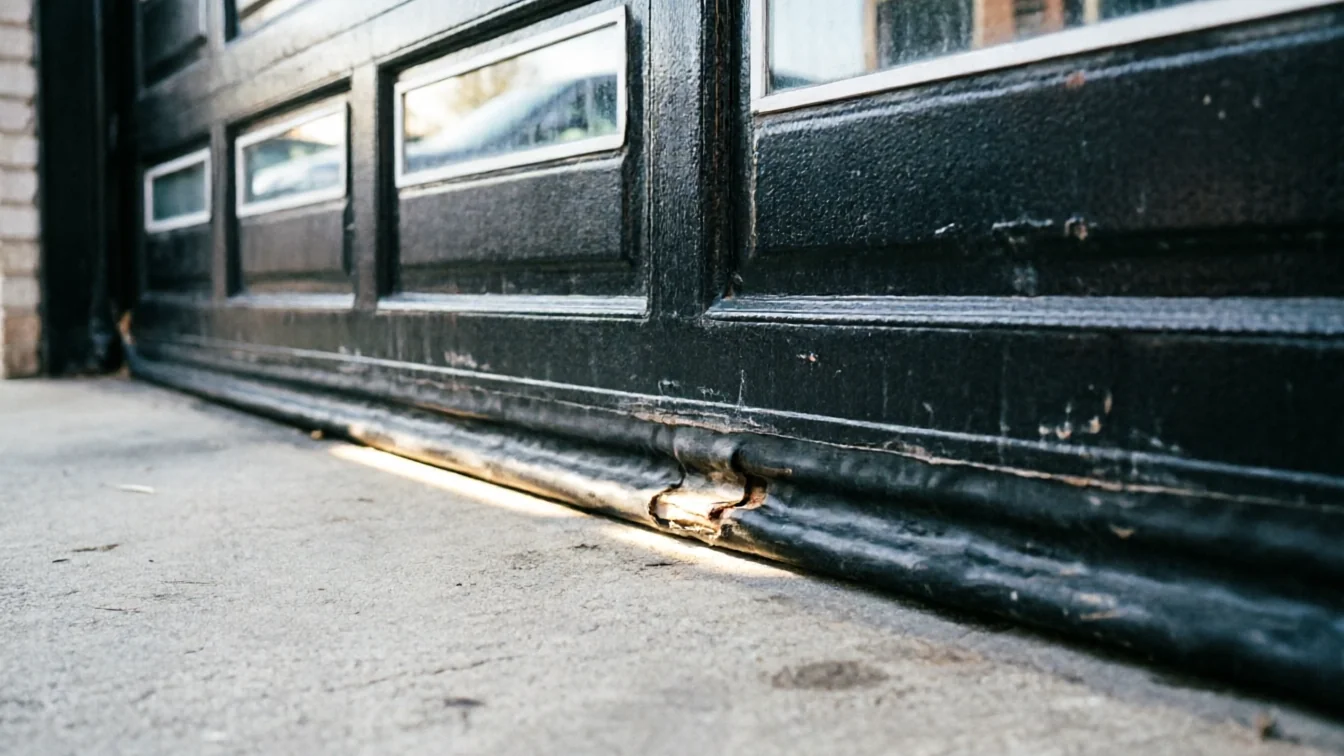
This area sits in a cold, severe climate band, and that matters more for a garage door than for almost anything else attached to the house. Steel contracts in the cold, and on an older track system that's already a little out of alignment, that contraction is enough to turn a minor rub into a binding roller. Lubricant that worked fine in July turns thick in January, which is why a door that opened smooth all fall suddenly groans or hesitates once the temperature drops hard. Weather seals and drafts go together here too - a bottom seal that's cracked or pulled away lets cold air and meltwater track under the door, and on wood panel doors from the older end of that 1938-2000 build range, that moisture is what starts rot nobody notices until the panel's soft to the touch. None of this is dramatic. It's slow, and it's exactly the kind of thing that gets ignored until the door won't seal, won't balance, or won't open at all on the one morning you need it to.
The Problem
Here's the honest version: we can't give every door a long life with a tune-up. If a door is original to a house built in the 1960s and the spring has already gone once, putting a new spring on 50-year-old track and rollers is a patch, not a fix, and we'll tell you that instead of selling you the patch. Replacement makes more financial sense than repeated repair once you're replacing the same parts twice in a few years. What we won't do is guess at your door's condition over the phone - balance, spring type, and track wear all need eyes on them in person before anyone tells you whether this is a $200 job or a new-door conversation. That's true whether you're near Elm Grove, Butler, or out toward Pewaukee - the housing stock and the winters are similar enough across this part of the area that the same questions apply.
Frequently asked questions
How do I know if my garage door spring is close to failing?
Watch for the door feeling heavier when you lift it manually, or the opener straining and reversing partway. On doors original to houses from the 1960s-70s, a spring nearing the end of its rated cycles often shows up as a loud bang or visible gap in the coil. Don't wait for full failure - a stressed spring under tension is dangerous to work near.
Does cold weather really affect how my garage door operates?
Yes. In a cold, severe climate band like this one, steel track contracts, lubricant thickens, and seals stiffen or crack. A door that runs fine in warm months can bind, hesitate, or fail to seal once temperatures drop hard, especially on older hardware that's already slightly out of alignment.
Is it worth repairing an original door from the 1970s or should I replace it?
Depends what's failing. A single worn part on otherwise sound hardware is worth fixing. If you've already replaced the spring or opener once and something else is going, repeated repair usually costs more over time than replacing the door and hardware together - we'll give you a straight answer after we look at it.
Related garage door services in Brookfield
More garage door guides
Book garage door service in Brookfield
Call now or request a quote - tell us what the door is doing and where you are.