
Brookfield, WI · Garage Door Service
Garage Door Opener Repair Around Brookfield
Opener grinding, reversing, or dead in Brookfield's cold winters? We diagnose and repair garage door openers across homes built 1938-2000 throughout the area.
- Repairs & new doors
- Springs & openers
- Serving 6 nearby communities
How Long It Takes
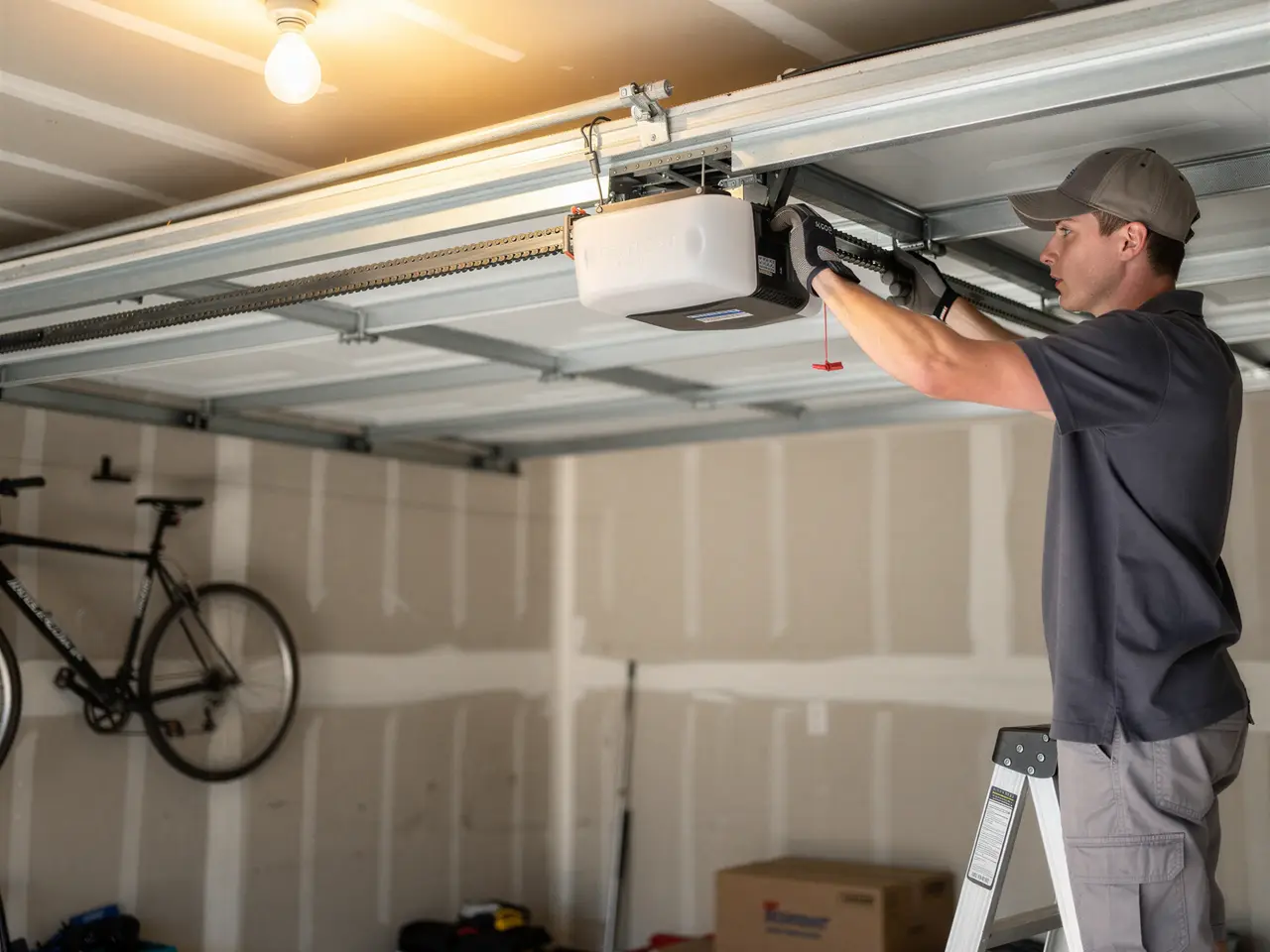
Most opener calls across this service area run one visit, start to finish. A dead logic board, a stripped gear, or a sensor knocked out of alignment are each maybe an hour once we're on site, parts in hand. The variable isn't the repair - it's the part. Chain-drive and belt-drive openers installed in the 1980s and 1990s used motor units and circuit boards that aren't stocked the way current models are, so if your opener is original to a house built in that window, we may need to order the board or capacitor rather than pull it off the truck. We'll tell you on the first visit whether that's the case, not after we've already opened the housing up. If the unit is a total loss - burned-out motor, cracked gear housing, a control board nobody makes any more - replacement is usually faster and cheaper than chasing parts for a 30-year-old unit, and we'll say so instead of running the meter on a repair that won't hold.
Doing It Yourself
Plenty of opener problems are fixable without a call: a sensor lens knocked off aim by a stray basketball, a remote that needs reprogramming, a limit switch that needs resetting after you adjusted the travel. Check the photo-eye sensors first - they sit a few inches off the floor on either side of the track, and if the little lights aren't steady, that's your whole problem, not the motor. Clean the lenses, make sure nothing's blocking the beam, and recheck alignment with a level if you can.
What you shouldn't do yourself: open the motor housing, touch the capacitor, or mess with the travel limits on a unit that's grinding or reversing under load. That's usually a mechanical issue downstream of the opener - a spring losing tension, a bent track, a roller binding - and an opener fighting a bad spring will burn out trying to do a job it wasn't built for. If you've reset the sensors, reprogrammed the remote, and it's still misbehaving, that's a sign something upstream of the opener is the actual cause.
What You Are Seeing
The opener reverses halfway up for no visible reason. It runs but the door doesn't move, or moves and the opener keeps grinding after it should've stopped. The light flashes but nothing else happens. Sometimes it's dead silent - nothing at all when you hit the button.
Across the houses we see in this area - a lot of them built in the 1960s and 70s, per the age of the stock here, with plenty more going back to the late 1930s - the opener itself usually isn't the first thing that failed. It's often the last thing to fail because it's been compensating for a spring, track, or cable problem for weeks. A motor straining against unbalanced springs works harder every cycle, and eventually the gear strips or the board trips a safety fault. That's why a dead opener and a broken spring often show up in the same week - the spring went first, and the opener finished the job.
Why This Fails Locally
This region sits in a severe cold climate band, and that matters more for openers than people expect. Steel contracts in deep cold, grease stiffens, and an opener motor that's fine in July has to work harder in January just to overcome a track and springs that have tightened up with the temperature. On an opener already carrying a weak capacitor or a worn gear, winter is what finishes it off - which is why opener calls cluster hard once the real cold sets in.
The other piece is the housing stock itself. With most homes in the broader service area dating to the 1960s and 70s, and plenty built even earlier back to 1938, a large share of openers in these houses have been replaced at least once already, sometimes with a unit sized for a lighter door than what's actually hanging on the track now. An opener undersized for its door works fine for a year or two, then starts failing exactly the way described above - reversing, grinding, tripping out - especially once winter adds resistance to a system that was already borderline.
Frequently asked questions
Why does my opener only act up in winter?
Cold stiffens grease in the track and rollers and tightens spring tension, so the opener's motor has to work harder to move the door. If the motor, gear, or capacitor was already marginal, winter is usually what pushes it into failure. It's rarely a coincidence - the opener was compensating for something else before the cold made it worse.
Can you fix an opener instead of replacing it?
Often yes - boards, capacitors, and gears can be repaired or swapped on many units. The exception is older openers where the specific motor or board is no longer made; at that point we'll tell you replacement makes more sense than chasing a part that doesn't exist anymore.
My opener runs but the door barely moves - is that the opener?
Usually not. That's a classic sign of a spring losing tension or a cable binding - the opener is doing its job, but the mechanical system it's fighting against has failed. Pushing the opener to compensate is what burns it out.
How do I know if it's the sensors or the motor?
If the opener light flashes but the motor doesn't run, or the door reverses before it closes, check the sensor alignment first - it's the most common and cheapest fix. If the sensors are aligned and clean and it still won't run, that points to the motor, board, or gear.
Related services
Related guides
Book garage door service in Brookfield
Call now or request a quote - tell us what the door is doing and where you are.