
Brookfield, WI · Garage Door Service
When a Spring Goes in Cold Weather
A look at why torsion springs fail in cold snaps on Brookfield's 1960s-70s housing stock, what to do first, and when waiting makes the repair worse, not better.
- Repairs & new doors
- Springs & openers
- Serving 6 nearby communities
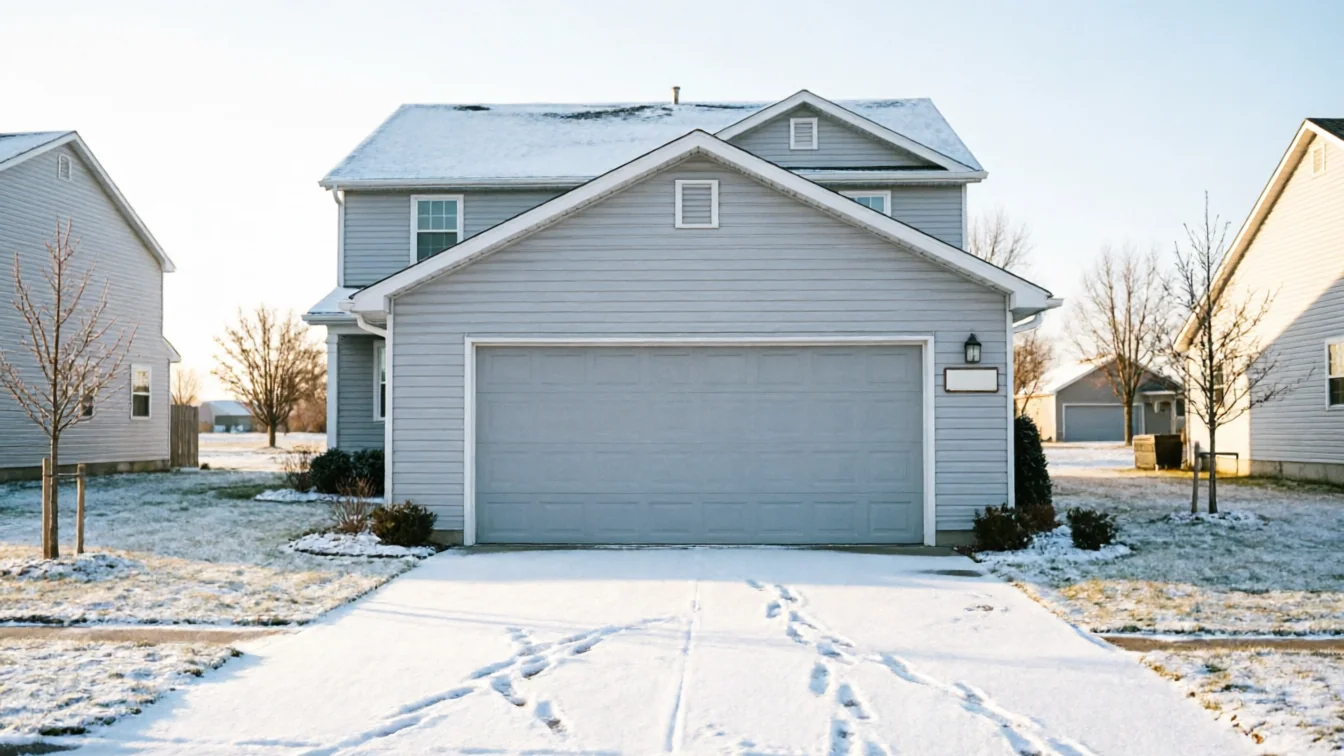
Doing Nothing For Now
If a spring lets go on a night when it's well below freezing, the door is dead weight. You can't lift it by hand without real risk, and the opener will strain or strip trying. The instinct to wait until morning, or until the weekend, usually costs more than the repair itself, because a door stuck shut or stuck open leaves the garage exposed to the same cold that broke the spring in the first place.
Houses in Brookfield's older neighborhoods date mostly to the 1960s and 70s, with a median build year of 1978. A lot of those garages still run the original torsion hardware, sized for a door that's forty-plus years old and springs that were never meant to be stretched past their rated cycle count. Waiting doesn't just risk a second broken spring - on a worn one-piece door, the extra strain can bend the track or crack a panel that was already brittle from decades of temperature swings.
One limitation worth saying plainly: we don't always carry the exact spring size for this era of door on the truck. Some of the original hardware from that period isn't a stock item anymore, and ordering it can add a day or two. That's not a reason to let the door sit open or closed under strain - it's a reason to get it looked at before a small problem becomes a track or opener problem too.
What Most People Get Wrong
The common assumption is that springs break from age or use alone - open and close the door enough times and eventually it gives out. That's true, but it skips the other half of the story for a town like this one. A house built in 1965, typical for this area, likely still has its original torsion spring if nobody's touched it since, and that spring has spent decades absorbing freeze-thaw cycles on top of normal wear.
People also assume a spring failure is sudden and unpredictable. Usually it isn't. Steel fatigues gradually, and cold makes brittle metal fail faster right at the point it was already weakest. If a door's been sounding louder or closing unevenly for a few weeks, that's the spring telling you something before it actually snaps.
The other mistake is treating the fix as cosmetic - swap the spring, move on. On the original hardware common to this era's housing stock, the drum, cable, and bearing plate have usually aged at the same rate as the spring. Replacing one part and leaving the rest worn just moves the next failure a few months down the road.
What the Weather Here Does to It
Brookfield sits in a COLD severe climate band, where temperatures swing enough to make a 30-year-old torsion spring snap without warning. Steel contracts in the cold, and a spring that's already fatigued from thousands of cycles loses flexibility right when it needs it most. That's why spring failures cluster in the hardest cold snaps of the year rather than spreading evenly across the seasons.
It's not just the spring. Cold tightens tolerances across the whole system - rollers stiffen, lubricant thickens, and a track that was slightly out of alignment in warm weather becomes a track that binds in winter. On a door original to a house from the 1960s or 70s, none of that hardware was designed with today's higher-cycle springs or sealed bearings, so the whole assembly feels the cold more than a newer door would.
Moisture matters too. Freeze-thaw cycling on an unheated garage slab can work a bottom bracket loose over the years, which puts uneven load on the spring every time the door runs. None of this is dramatic on its own - it's cumulative, which is exactly why a door that's been fine for years can fail on one particular cold morning.
The Problem
Put the pieces together and the pattern is specific to this area, not generic to garage doors everywhere. With 101,523 owner-occupied houses across this service area and a median household income of $111,417, most owners here can afford a same-week repair rather than letting the door sit broken, but a lot of them don't realize the age of their hardware is working against them until the spring actually goes.
Elm Grove sits two miles east and shares the same 1960s-70s building stock, so the same cold-snap failures show up there too. That's not a coincidence - it's the same era of construction hitting the same climate band. The problem isn't any single cold night. It's forty-some years of cycles on hardware that was never rated for this many winters, finally meeting a morning cold enough to finish the job.
Frequently asked questions
Why did my spring break on such a cold morning specifically?
Cold makes steel more brittle, and a torsion spring that's already fatigued from years of cycles loses what flexibility it had left right when the temperature drops. In a severe-cold climate like this one, failures cluster in the coldest stretches of the year rather than happening at random.
My house was built in the 1960s. Is the spring probably original?
It's possible, especially if nobody's replaced it before. Median construction in this area dates to 1978, and a lot of that original torsion hardware is still in service. Original springs from that era weren't built for the cycle counts or cold tolerances modern springs handle.
Can I just replace the spring myself to save money?
We don't recommend it. A torsion spring under tension can cause serious injury if it's released wrong, and on older hardware the drum, cable, and bearing plate are often worn too. Replacing just the spring without checking the rest of the assembly usually means another failure soon.
Do you have every spring size in stock for an older door?
Not always. Some hardware from houses built decades ago isn't a stock size anymore, and ordering it can take a day or two. We'll tell you up front if your door needs a part we don't carry on the truck.
Related garage door services in Brookfield
More garage door guides
Book garage door service in Brookfield
Call now or request a quote - tell us what the door is doing and where you are.