
Brookfield, WI · Garage Door Service
Roller Replacement for Butler's 1960s-Era Garage Doors
Butler homes date to around 1960, nearly two decades older than the area median. See why that changes which rollers fail first and what we carry for the fix.
- Repairs & new doors
- Springs & openers
- Serving 6 nearby communities
Why This Fails Locally
Most of the service area we cover from Brookfield has a median build year of 1978, but Butler sits apart from that. Houses here went up around 1960, closer to two decades older than the typical home we see on a service call elsewhere in the area. That matters for rollers specifically. A door built in 1960 has usually been re-sprung, re-cabled, and sometimes re-tracked at least once over the decades, but the rollers are the part owners forget about because they don't make noise until they're already failing. On a door that old, you're often looking at steel rollers on steel track with no nylon anywhere in the system, which is a different wear pattern than what you'd find on a door from the 1980s or later. Steel-on-steel wears the track lip faster, and once that lip wears, a new roller still won't ride straight in it. We're working from Brookfield, about 4 miles out, so we're not guessing at what's common here in general terms - we're pricing the job knowing the hardware generation we're likely to find before we open the panel.
What You Pay
We don't have a posted price for this job, and we're not going to invent one here. What we can tell you is what drives the number up or down. Butler's median household income runs $55,577, well under the $111,417 median across the wider area we serve from Brookfield. That gap shows up in the choices homeowners make on this call - more often it's steel rollers going back in rather than sealed nylon, because steel costs less per roller and the door still works fine with it. Nylon rollers run quieter and last longer, but they're a bigger jump in price for a swap on all ten rollers at once. If only two or three rollers are worn, we'll tell you that instead of upselling a full set you don't need yet. One honest limit: if the track itself is bent or the wear has gone past the roller into the rail, roller replacement alone won't fix the noise, and we'll say so rather than sell you a part that won't solve the problem.
What Is on the Truck
For a cold-climate area like this, we carry both 7-ball and 10-ball bearing rollers, in steel and sealed nylon, because a 1960-era door and a newer one don't take the same stem length or wheel diameter. Severe cold is part of the climate band this whole area sits in, and that means grease matters as much as the roller itself - we carry low-temperature lubricant rated for the swings we actually get here, not the all-purpose can from a hardware shelf. We also stock replacement roller brackets, since on steel track from this era the bracket often wears out before the roller does and swapping just the wheel leaves the real problem in place. What we don't carry on the truck is specialty track for odd widths - if Butler's older stock throws us a non-standard rail, that part gets ordered and the job splits into two visits. That's rare, but it happens often enough on houses this age that we'd rather tell you upfront than pretend every job wraps in one trip.
What You Are Seeing
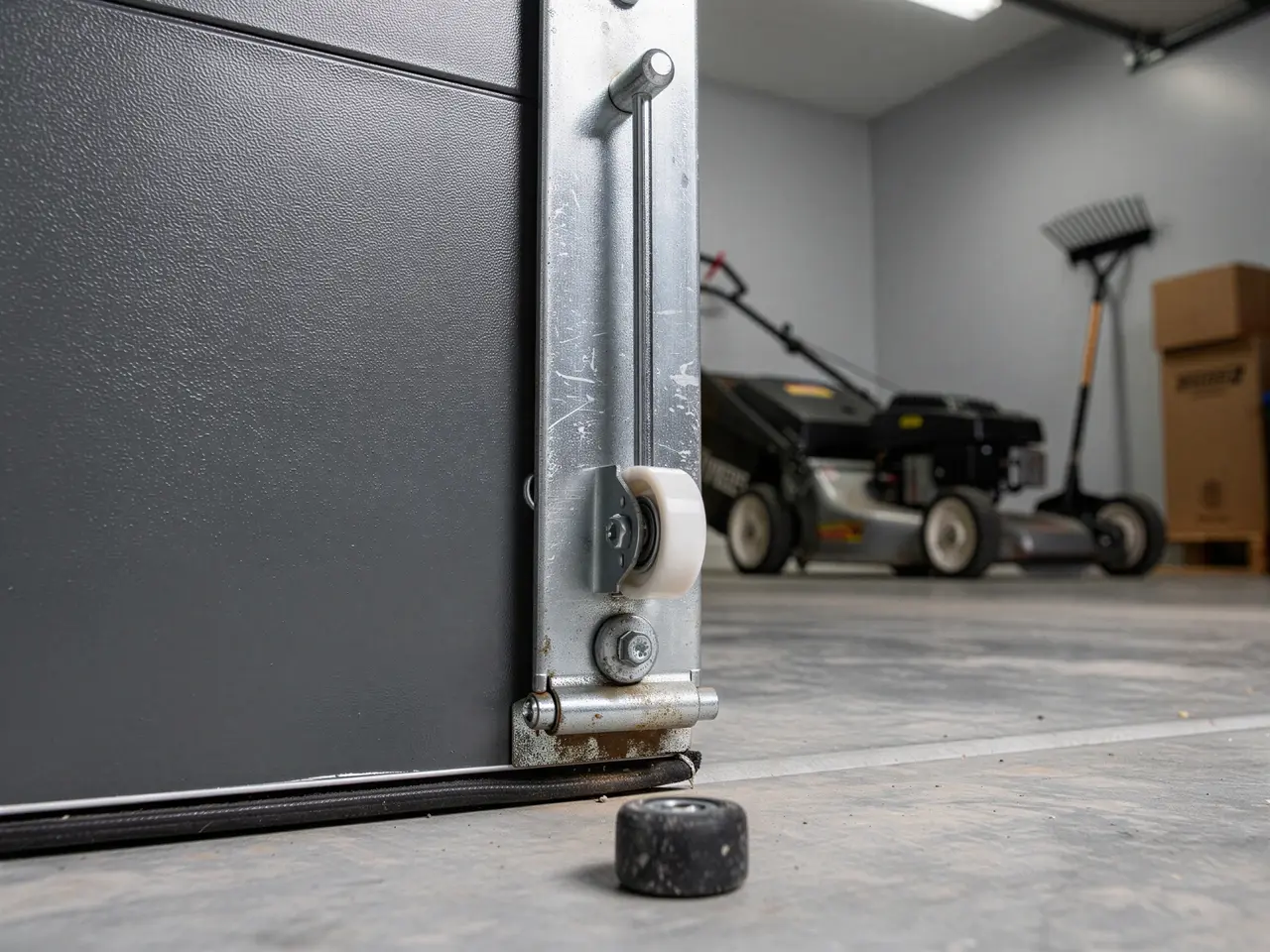
On a door built around 1960, the first sign is usually a grinding or scraping sound right as the door starts moving, not partway through the cycle - that's the roller catching on a worn spot in track that's been riding the same ten feet for over sixty years. You might also see the door shudder or jump slightly as it crosses the bend where the horizontal track meets the vertical section, which is where roller wear shows up first on steel track. Rust on the roller wheel itself, not just the bracket, is common given the cold-season moisture this area gets - steel rollers that have never been swapped since the door went in are the usual culprit. If the door is pulling to one side as it closes, check whether it's worse on the side that gets more direct weather; uneven wear between the two tracks is typical on a door this age because one side usually takes more exposure than the other. None of this means the opener or the spring is at fault - it's worth ruling out the rollers first before anyone touches the torsion system.
Frequently asked questions
How old does a roller have to be before it needs replacing in Butler?
There's no fixed age, but on a door built around 1960 the original steel rollers have usually been swapped at least once by now. Grinding, visible rust on the wheel, or the door jumping at the track bend are better signals than a calendar date - those symptoms point to roller wear regardless of when the last swap happened.
Do I need all ten rollers replaced or just the worn ones?
Just the worn ones, usually. We check each roller and bracket individually rather than replacing the full set by default. If wear is uneven - which is common on older steel track - you may only need two or three swapped, and we'll tell you that straight rather than push a full-set job.
Why does cold weather make roller noise worse in Butler?
This area sits in a severe cold climate band, and grease that's fine in summer stiffens up in winter, especially on older steel rollers with worn bearings. The stiff grease makes the roller drag instead of spin freely, which is what you hear as a grinding or squealing sound on cold mornings.
Book garage door service in Brookfield
Call now or request a quote - tell us what the door is doing and where you are.